Empathy: The Last Frontier
Anyone following the debate on machine translation and interpreting knows the sequence of arguments by heart.
First we were told: the machine will never be accurate enough. Translation and interpreting is too complex, too contextual, too ambiguous for an automatic system to render faithfully. Then accuracy improved exponentially, and across many domains and language pairs the gap narrowed until, in certain use cases, it became irrelevant.
So the argument shifted: fine, the content gets through, but a synthetic voice will never sound natural. It's metallic, flat, tiring to listen to. Today we have synthetic voices that are virtually indistinguishable from real ones, capable of prosody, hesitation, even of reproducing the original speaker's timbre.
And so the line moved once again, to the last territory considered impregnable: empathy. The machine may translate well and speak well, but warmth, relationship, trust. Those remain human. Curiously, an aspect always considered peripheral to the core of the profession has become its last line of defense.
There was one thing we took for granted: empathy was the boundary.
The machine could calculate, optimize, diagnose, but warmth, connection, trust remained human territory.
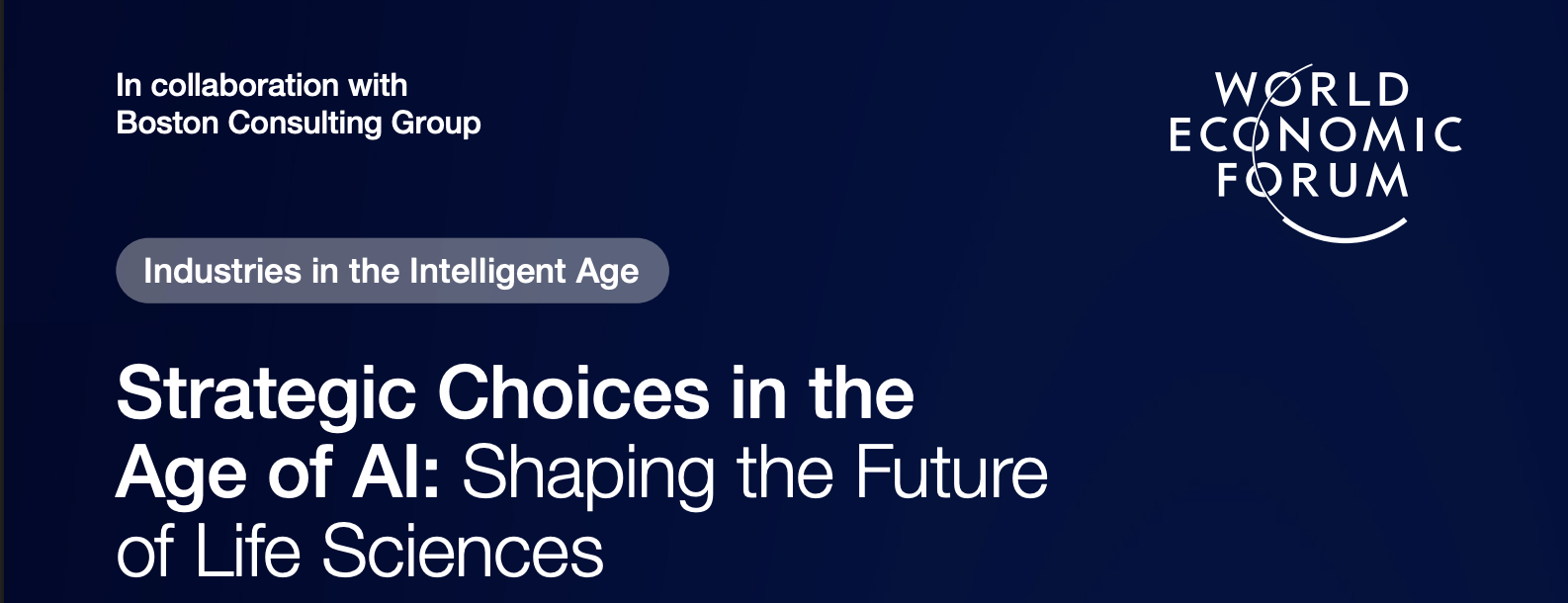
In May, the World Economic Forum, together with Boston Consulting Group, published a report with a seemingly sector-specific title: Strategic Choices in the Age of AI. The numbers tell a different story: in text-based interactions, AI responses are perceived as more empathetic in 73% of cases; physicians themselves prefer those responses 79% of the time; and over 80% of Gen Z trusts a diagnosis suggested by AI more than one from their own doctor.
The point is not that AI has learned to feel — it feels nothing at all. The point is that perceived warmth has stopped coinciding with the presence of a person. Trust, i.e. the foundation of every relationship-based service, from healthcare to consulting, and yes, translation and interpreting too, no longer follows automatically from having a face. The report explicitly speaks of a "trust inflection": a point of no return.
For us, the lesson is uncomfortable but valuable. If even perceived empathy can be replicated, the "machines will never" argument stops working as a defense strategy. Not because machines can do everything, but because every boundary declared uncrossable has so far been crossed, and moving the goalposts one more meter down the field is not a theory of the profession. It's a retreat.
To be clear: none of this means AI translation and interpreting already matches human expertise across the board. It doesn't, not by a long way. What it does mean is that the belief we've relied on — that certain dimensions are ours by definition, simply because we're human — turns out to be wrong. Empathy is the clearest example, and it happened first in text, where the barrier to imitation is lowest. In speech, that level hasn't been reached yet. But there is no reason to think it won't be, and soon. What's being produced is an imitation, not the real thing, but a credible one, and credibility is what trust is actually built on. The question this leaves our field with is not whether that threshold will be crossed. It's what we do once it has.
For years we took empathy for granted, as if being there were enough.
AI is not taking empathy away from us. It is taking away the alibi of taking it for granted.
And perhaps that is the most useful reminder we could have received: presence and listening are not declared. They are practiced.
Source: World Economic Forum, in collaboration with Boston Consulting Group, "Strategic Choices in the Age of AI: Shaping the Future of Life Sciences", May 2026.